The Meter Doesn't Lie: A Fifteen-Minute Leak Check for Watford Homes
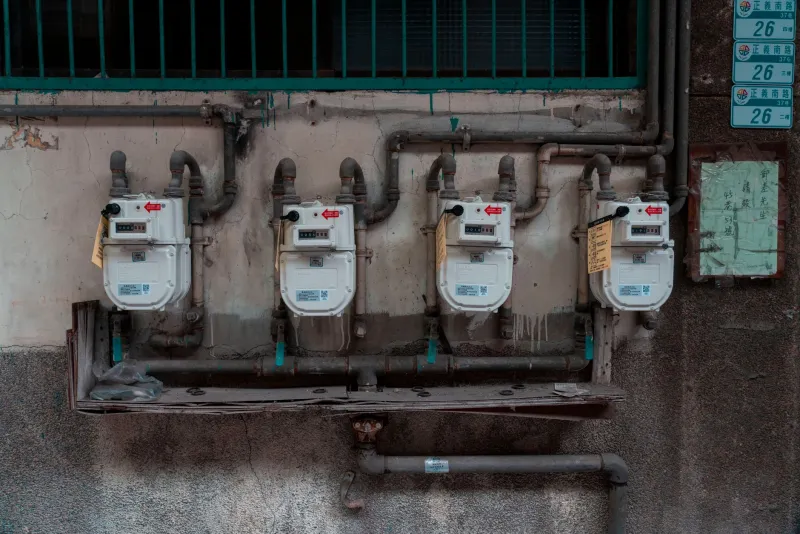
Water is remarkably good at escaping without announcing itself. A pinhole on a hidden pipe, a failing toilet valve, a slow weep under a concrete floor — none of these produce the dramatic burst that gets a plumber called at 11pm. They produce a bill that creeps up, a patch of skirting that feels a bit soft, and a nagging feeling that something isn't right. The good news is that you already own the diagnostic tool. It's sitting in a metal chamber at the end of your front path.
First, find the thing
In most Watford streets the meter lives outdoors, in a small chamber set into the pavement or just inside the front boundary. Lift the lid carefully — they can be heavy, and in winter they're often half-full of leaves and grit. Flats and conversions are different: the meter might be under the kitchen sink, in a hallway cupboard, or in a shared riser cupboard if you're in a block in the town centre. If you genuinely can't locate it, your bill or a quick call to Affinity Water will tell you where it is and whether the property is metered at all.
While you're down there, note the stop tap in the chamber. You'll want to know how to turn it later.
Get the house to 'nothing running'
This is where most meter tests fall apart. You need a genuine zero-draw moment, which means taps off, the washing machine and dishwasher not mid-cycle, no garden tap dribbling, and nobody flushing a loo. If you have a water softener, wait until it's finished regenerating. If you have a combi boiler, leave the heating alone — a sealed system doesn't draw mains water during normal operation, so it shouldn't muddy the results.
Give it a few minutes after the last tap is closed so cisterns finish filling, then start.
Read the dial properly
The main figures — usually black on white — are cubic metres. The red digits, or a small dial, are litres and fractions of a litre. Many meters also have a tiny spinner or a star-shaped leak indicator that turns whenever any water is passing through. Photograph the whole face with your phone; the timestamp is useful if you ever need to prove a point to your supplier.
The test itself
Write down the full reading, including the red numbers. Wait fifteen minutes. Do not use water during that window — no kettle refills, no hand washing, no 'just a quick rinse' of a mug. Then read it again.
- Identical reading, no spinner movement: nothing is passing through the meter. Any leak you have, if you have one, is on the heating side or below the meter's detection threshold.
- Moved slightly: a small but real leak. A single litre across fifteen minutes sounds trivial, but that's four litres an hour, roughly ninety-six litres a day, and more than thirty cubic metres a year. Once you add sewerage charges, that's well north of a hundred pounds annually — before you've counted any damage to floors or joists.
- Spinner turning steadily with everything off: you've got a clear, active leak. Keep reading.
Rule out the boring culprits first
Toilet cisterns are the number one false alarm. A failing flush valve lets water trickle constantly down the back of the pan. Put a few drops of food colouring in the cistern, leave it half an hour without flushing, and see whether colour appears in the bowl. Do this for every loo in the house, not just the one you use most.
Also check overflow pipes, outside taps, hose timers, and any water butt feed. Then repeat the meter test.
The stop tap trick that narrows it down
If the meter keeps moving, turn off your internal stop tap — usually under the kitchen sink, sometimes in a downstairs loo or utility cupboard. Now read the meter again.
- Meter has stopped: the leak is inside the property, on the pipework after the stop tap. Good news in one sense — it's your side, so you can get it fixed without waiting for anyone's permission.
- Meter is still moving: the leak is between the meter and your stop tap. That's often the buried supply pipe under the front garden, and it may sit on the supplier's side of the boundary. Contact Affinity Water before you start pricing up a dig; some of these are their responsibility to investigate.
Time to call someone
Stop investigating and get a plumber in if any of the following applies: the spinner is whizzing round, you can hear water running when the house is quiet, there's a warm patch on the floor that shouldn't be warm, a damp patch is spreading, the meter chamber itself is full of water, or the meter reading climbs even after the internal stop tap is closed. Those last two can indicate a supply pipe failure, and they're not a DIY job.
Also don't assume a leak-free meter test means you're in the clear. A leak on the central heating circuit won't touch the water meter at all — if your boiler pressure keeps dropping, that's a separate investigation entirely.
Fifteen minutes, one photo, and a pencil. That's the whole test. It won't tell you exactly where the water is going, but it will tell you whether anything is going at all — and that's the piece of information that saves Watford homeowners the most money.