The Little Sensor Under the Sink: What Leak Sensors Can and Can't Do for Watford Homes
Smart leak sensors are having a moment. Walk into any DIY shed or scroll through a home-tech aisle and you'll find them: palm-sized battery gadgets that sit on the floor, chirp when they get wet and send a notification to your phone. Prices start around the cost of a decent takeaway. The pitch is simple — catch a leak early and save thousands.
That pitch is not wrong. It is, however, only half the story. In a town like Watford, where Victorian terraces, 1930s semis and shiny new-build flats all share the same water mains, a leak sensor can be genuinely useful. It can also sit quietly for years, miss the leak that matters and give you a false sense of security. So before you fill your basket, here's a grounded view.
What These Things Actually Do
Under the plastic shell is a pair of metal contacts, a battery and a small speaker. When water bridges the contacts, the alarm sounds. Some models use a Wi-Fi hub, some use Zigbee, some just beep loudly and hope you're in. A few include temperature and humidity readings, which is handy in an airing cupboard but not the same as leak detection.
What they do not do is monitor pipe pressure, flow, temperature or the inside of a wall. They only know that water has reached their contacts. Think puddle detector, not pipe detective. If a joint is weeping behind plasterboard or a waste pipe is seeping under a floorboard, the sensor on the shelf above will have no idea.
Where They Earn Their Keep
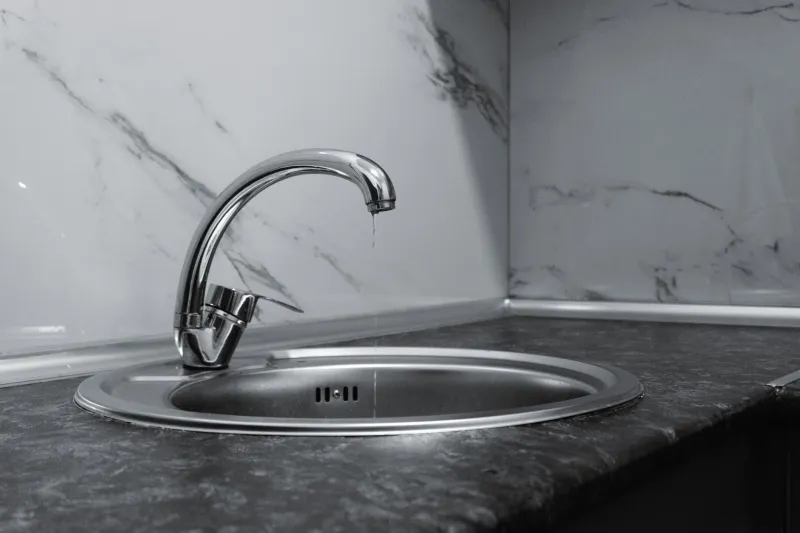
The most obvious spot is under the kitchen sink. It is where flexi hoses, compression joints and waste traps cluster, and where a failure can quietly soak a cabinet before anyone notices. Put the sensor on the cabinet floor, not on a shelf — water finds the lowest point.
Other sensible locations include behind the washing machine or dishwasher, inside an airing cupboard (especially in older Watford homes with a hot water cylinder), beside the stopcock, and in the utility cupboard of a new-build flat where the manifold and boiler often live. In flats, a leak can reach the neighbour below faster than it reaches your ceiling, so under-sink and utility-cupboard sensors are worth considering.
Name each sensor by location in the app, so a notification says 'Kitchen sink' rather than 'Device 4'. Otherwise you'll be playing detective at 2am.
The Slow Leak Blind Spot
Most dramatic leaks are sudden: a burst flexi hose, a failed valve, a washing machine hose that lets go. A sensor can help there. But many expensive leaks are slow. A dripping compression joint, a seeping waste pipe or a cistern overflow can run for weeks. A slow drip may evaporate, run along a pipe and drip somewhere else, or form a limescale crust. The sensor stays dry and silent.
Watford's hard water makes this worse. Limescale can seal a tiny weep for months and then let go. A sensor won't warn you about the crust; it only reacts when water arrives. So pair sensors with periodic visual checks: a torch under the sink, a dry tissue run along joints, and a look for white or green crust. That is still the most reliable early warning system in the house.
Insurance: Useful Nudge, Not Magic Discount
Some insurers offer a discount for leak detection devices; plenty don't. Check your policy before buying on that basis. A sensor may help show you took reasonable care, but it won't guarantee a claim. Insurers tend to care about maintenance, prompt repairs and whether you did something sensible after the alarm sounded.
For landlords, sensors can be a useful extra layer in a rental property, but they are no substitute for inspections. Tenants may unplug hubs or ignore notifications, so keep instructions simple and make sure the device is tested at handover.
The Low-Tech Backup That Costs Nothing
You don't need an app to catch a leak. Leave a dry piece of kitchen roll under the sink joints and check it the next day. Look for crust. Run the tap and watch the waste trap. Do a monthly five-minute walk-through of the airing cupboard, under-sink cabinets and the washing machine hose. Know where your stopcock is and label it. If you're going away, consider turning off the water at the stopcock if it's safe to do so, or ask someone to check.
Test the sensor itself every month by touching the contacts with a wet finger, then drying it. Replace the battery annually — many use a coin cell — and remember that a Wi-Fi hub needs power and internet. If the router is down, a local alarm may still sound but the phone notification won't.
The Verdict
For £20–£40 and an hour of fiddling, a couple of sensors are a reasonable add-on, especially under a kitchen sink or in a flat where a leak could reach the neighbour below. But they are an alarm bell, not a plumber. Buy them for early warning, place them where water would actually pool, test them, and keep doing the boring checks that catch slow leaks. In Watford's mixed housing stock, that combination is what actually protects your home.