Your Home's Outside Overflow Pipe Is a Warning Light — Here's How to Read It
Photo: Terry Ross from Corpus Christi, Texas, United States, CC BY-SA 2.0, via Wikimedia Commons
You are putting the bins out, or maybe wrestling a recycling box into submission, when you hear it: a steady little drip coming from a pipe on the outside wall. Most of us give it a glance, assume it is nothing much, and get on with the day. Sometimes that is fine. Sometimes it is the first quiet warning of a repair bill that is quietly gathering pace.
Outside overflow and discharge pipes are not decorative. They are there to tell you something. The trick is knowing which pipe is talking, what it is trying to say, and whether the message can wait until Monday morning.
Start with the pipe, not the puddle
Before you panic, have a proper look at where the water is coming from. In a typical Watford home you are likely to see one of four things:
- A small white plastic pipe poking through the wall near a bathroom, often at first-floor level. That is usually a toilet cistern overflow.
- A pipe near the eaves or gable end, especially in an older house with a loft tank. That could be a cold-water tank overflow.
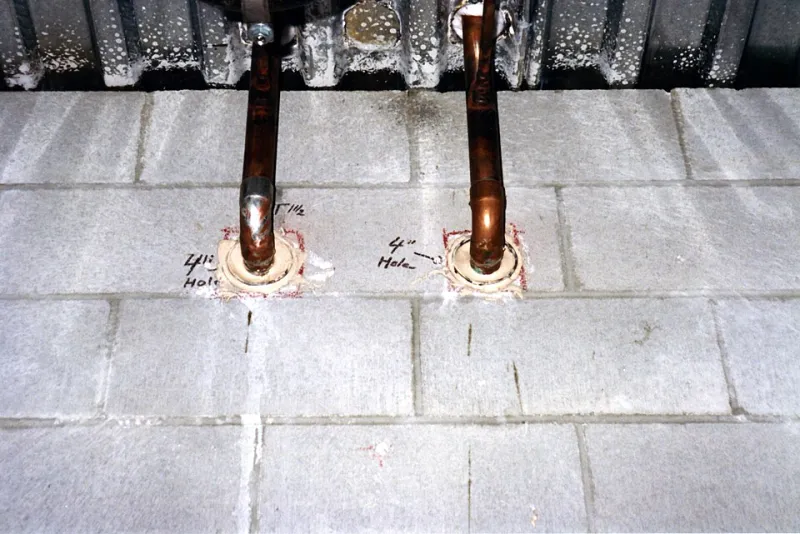
- A copper pipe near the boiler, often low down and sometimes turned back towards the wall. That is a strong candidate for a boiler pressure relief valve, or PRV.
- A white plastic pipe, often 32mm or so, coming from a condensing boiler. That is likely the condensate line.
Location is a clue, not proof. If you can safely trace the pipe back inside — without climbing on anything dodgy or moving a boiler casing — do that. Take a photo of the pipe and the wet patch. Do not block the pipe to stop the drip. It is doing a job, even if the job is telling you something is wrong.
Suspect one: the toilet cistern overflow
A toilet overflow is one of the most common causes of a dripping outside pipe. It often shows up as a small white pipe near the bathroom wall. The usual culprit is a fill valve or float valve that is not shutting off properly. In Watford's hard water, limescale and grit can stop a valve seating cleanly, so the cistern keeps filling and the excess trickles outside.
Other possibilities include a float set too high, a split float, or a flush valve that is letting water run into the pan. If you can hear a faint hiss from the cistern, or see water moving in the pan when nobody has flushed, that is a good hint.
This kind of drip is rarely an emergency, but it is not harmless either. It wastes water, can stain the wall, and on a metered supply it quietly adds to the bill. A new fill valve or washer is usually a straightforward fix. If the cistern is overflowing and the water is close to electrical fittings, treat it more seriously and isolate the water supply if you can.
Suspect two: the loft tank overflow
If the pipe is up near the roof, and your home has a cold-water tank or a feed-and-expansion tank in the loft, pay attention. A tank overflow often means a ball valve has stuck open, a float has filled with water, or the water level is set too high. Sometimes the warning pipe itself is blocked or frozen, which is worse because the tank can then overflow inside the loft rather than outside.
This is one to act on promptly. A loft tank that keeps overflowing can soak insulation, stain ceilings and put water near wiring. If you can safely get to the loft, look for water around the tank and check whether the overflow pipe is running. If the tank is overflowing and you cannot stop it, turn off the mains water supply and call a plumber.
Cold weather makes this one more urgent. A frozen overflow pipe can turn a small valve fault into a ceiling repair. With winter on the way, it is worth checking loft pipes and insulation now rather than after the first hard frost.
Suspect three: the boiler pressure relief valve
A copper pipe near the boiler that drips or runs continuously deserves respect. The pressure relief valve is a safety device. It should stay shut. If it is passing water, something is causing pressure to rise too high, or the valve itself has picked up debris and no longer seals.
Common reasons include a faulty expansion vessel, an overfilled system, or a valve that has simply had enough. If your boiler pressure gauge is high, or the pressure climbs when the heating comes on, do not just keep topping the system up and hoping. That can make things worse.
A continuous drip from a PRV is not a wait-and-see job. It can lead to pressure loss, boiler lockouts and, in the wrong circumstances, water where you really do not want it. If the water is hot or steaming, keep clear and call a Gas Safe registered engineer. This is also not a pipe to block, tape up or silicone. It is a safety valve for a reason.
Suspect four: the condensate pipe
Condensing boilers produce condensate, which is mildly acidic water that has to go somewhere. That somewhere is often an outside drain or a small external pipe. A drip from a condensate line while the boiler is running is usually normal.
In cold weather, though, condensate pipes can freeze. If the boiler stops working and you can see ice at the end of the pipe, the condensate may be blocked. Thaw it gently with warm water — not boiling water — and never shove anything up the pipe. If it freezes repeatedly, the route or insulation may need changing. A drip here is not an overflow in the traditional sense, but it is often mistaken for one.
Which drips can wait, and which cannot
A condensate drip during boiler operation is generally normal. A toilet overflow is usually a prompt repair rather than an emergency, unless water is escaping somewhere it should not. A loft tank overflow needs attention quickly, especially if there is any sign of water in the ceiling. A pressure relief valve that is passing continuously needs a qualified engineer.
Act immediately if water is running near electrics, coming through a ceiling, or you cannot stop the supply. Also act if the pipe is frozen, if the boiler has locked out, or if the drip has suddenly turned into a stream.
A five-minute check that costs nothing
Watch the pipe for a few minutes and note when it drips. If it starts after someone flushes the loo, suspect the cistern. If it happens when the heating or hot water is on, think boiler. If it never stops, day or night, a tank valve or PRV is more likely. Check the boiler pressure gauge, look for ceiling stains, and listen for running water in the cistern.
And please — do not put a bag, tape or a cork over the pipe to silence it. That is a bit like putting tape over a warning light on the dashboard. The problem has not gone away; it has just stopped being visible.
If you are not sure which pipe you are looking at, or the drip keeps coming back, get it checked. Perfect Plumbing Watford works on overflow pipes, cistern valves, loft tanks and boiler discharge issues across the town, from older terraces to newer builds. A quick diagnosis now is usually cheaper than the repair that follows a drip everyone ignored.