The 11pm Drip: A Room-by-Room Tap Audit for Watford Homes Before the Winter Bills Bite

There's a particular sound a house makes around eleven at night. The heating ticking as it cools, next door's bin going out, and — if you're unlucky — a tap in the next room marking time, one drop at a time.
Most of us tune it out until the bill lands and the drip is still there. This is a short, practical audit for Watford homeowners and renters who'd rather deal with it now, while the evenings are still dark and early and a plumber's diary hasn't yet filled up with burst-pipe emergencies.
What a drip actually costs (the honest version)
Let's not oversell it. A tap losing one drop a second is wasting roughly four litres a day — call it 1,500 litres a year. A faster drip, or a thin trickle running down the spout, can push that towards 5,500. On a metered supply in the Watford area, where water and sewerage together tend to land somewhere around £3–£4 per cubic metre, the direct cost is in the low tens of pounds a year. Annoying, not ruinous.
Two things make it worse than the arithmetic suggests.
The first is heat. If it's the hot tap, you're paying twice: once for the water and again to warm it before it goes straight down the drain. A few pounds on gas, considerably more if your hot water comes from an immersion heater.
The second, and much bigger, is escalation. A drip is rarely a stable condition. It's a washer or a cartridge on its way out, and what it does next is a bit of a lottery — a sudden spout-full into the cabinet below, a seized spindle that won't shut off at all, water tracking along a worktop and into chipboard that swells and never quite recovers.
Why it's usually a cheap part, not a new tap
Hard water is the backdrop here. The supply across Watford is on the hard side, and limescale loves nothing more than the inside of a tap. It roughens the seating surface, grit gets trapped, and the washer can no longer make a clean seal. Sometimes a quarter-turn ceramic cartridge simply wears out its seals, or the little O-rings at the base of a swivel spout dry out and start to weep.
The good news: washers cost pennies, ceramic cartridges typically £10–£30, and a whole replacement tap body is often £50–£150 in parts alone before you've paid anyone to fit it. The trick is identifying the tap before you shop — take a photo of it, note the brand if there's a stamp on the spout or handle, and dig out any paperwork that came with it. Mixers that are ten or fifteen years old can be awkward to match, and a plumber's merchant will usually be quicker at identifying a cartridge than a general DIY aisle.
The room-by-room drip audit
Set aside twenty minutes with a torch and a dry piece of kitchen roll. Work through the house in order and touch-dry every joint you can reach.
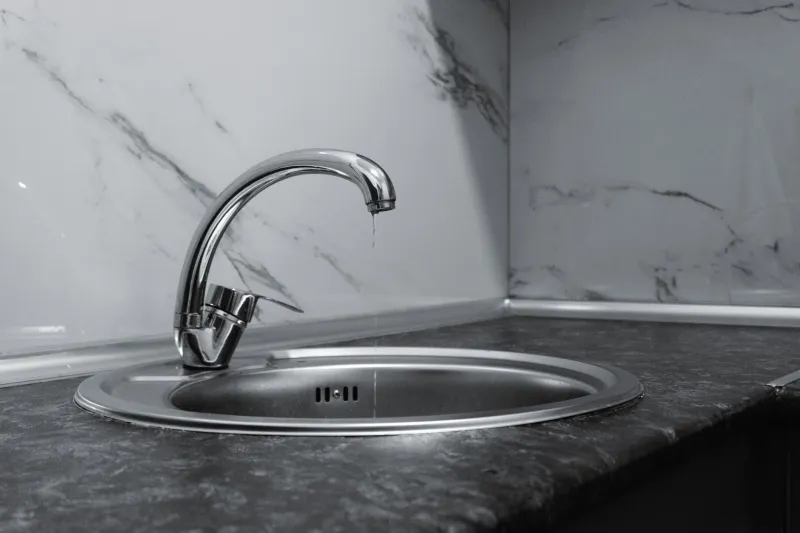
The kitchen. Dry the spout, then leave it a minute and dab the base of it. A drip from the spout itself is the washer or cartridge; a drip from under the swivel base is usually an O-ring. Open the cupboard underneath and check the flexi hoses, the isolation valves on the supply, and the inlet connections on the washing machine and dishwasher. Those braided hoses have a lifespan, and a bulging or rusty one is worth changing before it fails properly.
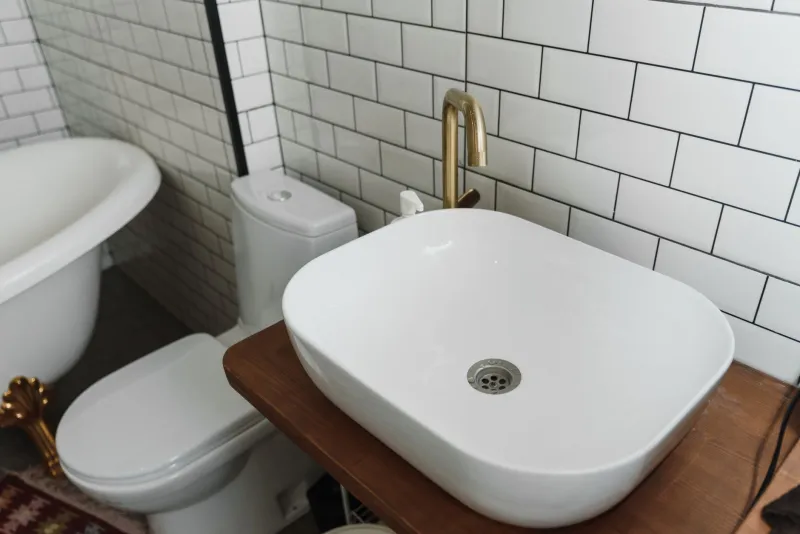
The main bathroom. Basin, bath, shower mixer. Run each tap hot and cold for a few seconds and watch for a drip from the spout after you switch off, and a weep underneath at the trap and waste. If your toilet makes a faint hissing noise long after it's been flushed, that's not a tap at all — it's a fill valve passing water into the pan, and a replacement is usually a straightforward job.
The cloakroom or second loo. The one nobody uses is the one nobody notices. Flush it, then listen.
Outside taps and garden fittings. A tap that survived last winter's frost without being isolated has done well. Check the wall plate and the body for splits and drips, and check whether it's fed from a pipe that runs along an unheated wall.
Radiator valves and the stopcock. Not strictly taps, but the same principle. A weep at a valve spindle leaves a green crust over time; a stopcock that's stiff now will be seized when you actually need it.
DIY, or call someone?
Most of the following is genuinely within reach for a careful homeowner: replacing a tap washer, swapping a ceramic cartridge you've matched correctly, fitting a new toilet fill valve, tightening a packing nut a quarter turn, or changing a braided flexi hose — provided there's a working isolation valve on the supply.
Call a plumber if the tap body is corroded into the basin or bath and you can feel it starting to move the whole ceramic, if the isolation valves are seized or missing and the water can't be shut off locally, if it's a concealed shower or bath mixer, or if water has already tracked somewhere you can't see. Anything involving gas or the boiler itself is a Gas Safe job, full stop.
The cost-of-inaction sum
Here's a two-minute calculation that beats any rule of thumb. Put a measuring jug under the drip for an hour, and note the millilitres. Multiply that by 8,760 — the number of hours in a year — to get millilitres per year. Divide by 1,000 for litres, and by another 1,000 for cubic metres. Multiply by your combined water-and-sewerage rate, somewhere near £3.50 a cubic metre on a metered supply.
If it's the hot tap, add the heating cost on top. Then add the realistic alternative: an out-of-hours call-out on a Sunday morning when the tap finally gives up, which is a good deal more than the whole year of wasted water.
That's the honest case for sorting it — not that the drip is draining your bank account, but that the cheap fix has a use-by date.
A weekend plan
Walk the house with a notebook and write down every drip, weep and crust, with the room and a photo. Order the parts. Shut off the water at the stopcock or the local isolation valve before you touch anything, and open a tap afterwards to confirm the supply is off and the pipe has drained. Keep a towel under the work and a bowl to catch the dregs.
Do one tap at a time, and test it before you move on. The eleven o'clock silence is worth it.